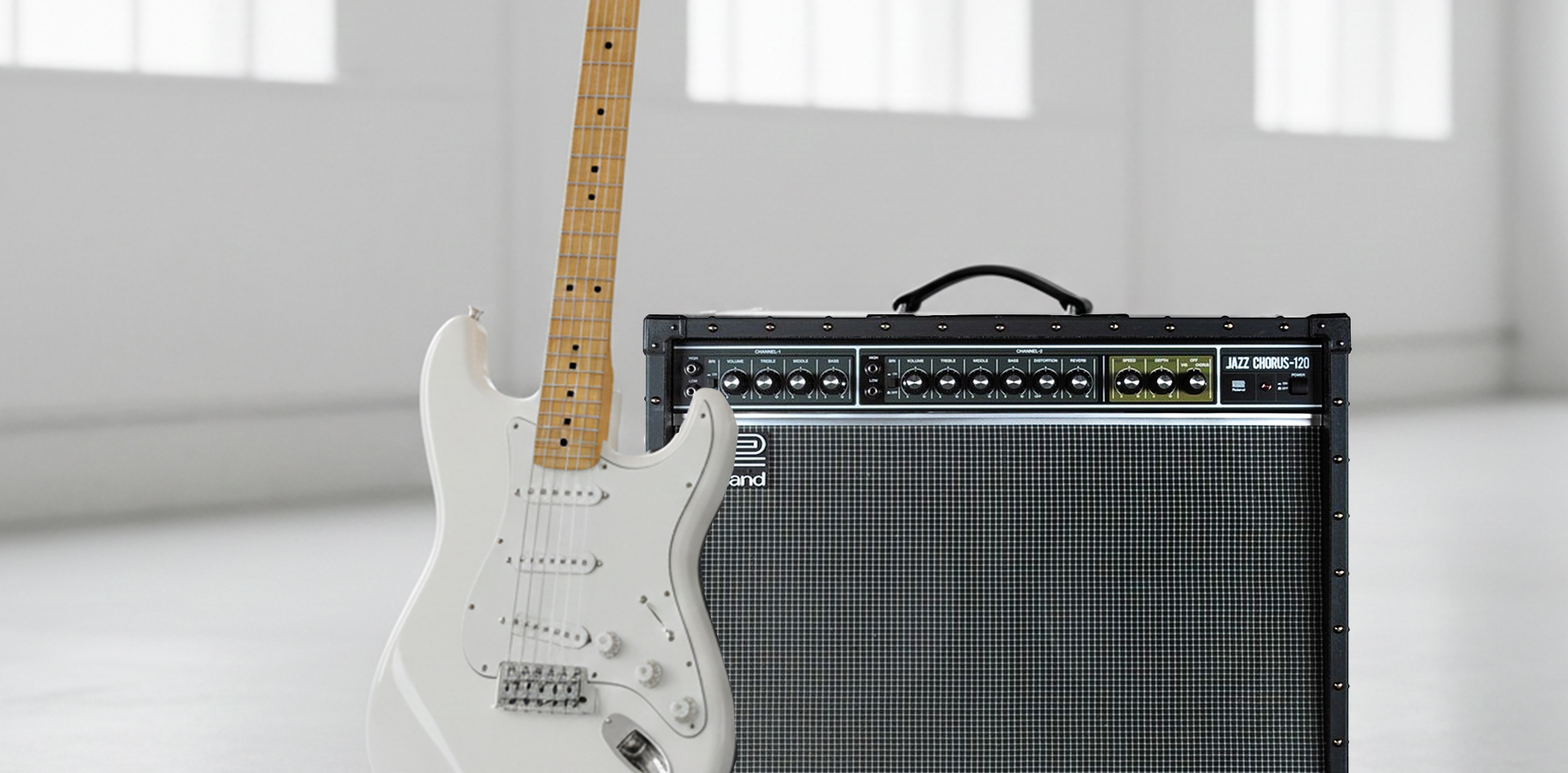
The “Interstellar” Fusion Recipe: Crafting the Perfect Jazz Fusion Tone with Audio Assault 🔥🎸
Jazz Fusion is a demanding genre. It requires the harmonic complexity of Jazz combined with the power and sustain of Rock. To nail this sound, you need a tone that is “liquid”—smooth enough for fast legato runs, yet articulate enough for complex chord voicings.
Think of the tonal “Mount Rushmore” of Fusion: John Scofield’s grit, Pat Metheny’s depth, and Allan Holdsworth’s violin-like sustain. Using Audio Assault’s Amp Locker, we can build a professional fusion rig that covers all these bases.
1. The Amp: The “Boutique” Clean & Lead
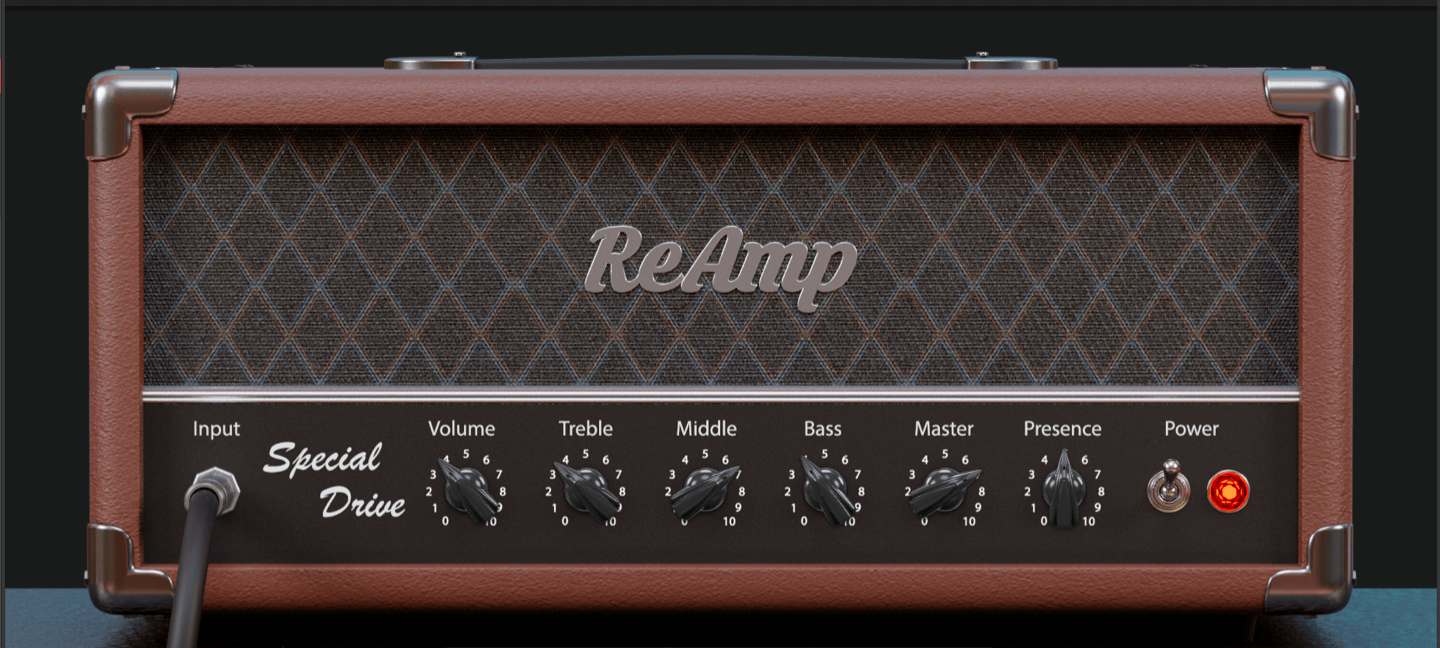
Fusion players typically avoid the “fizz” of high-gain metal amps and the “clank” of vintage British amps. We want a Boutique American sound—immense headroom with a smooth, compressed overdrive.
- The Audio Assault Choice: Special Drive (Modelled after the legendary Dumble Overdrive Special).
- Alternative: Piares (Modelled after the PRS Archon) – use the Clean channel for a modern, hi-fi fusion response or the Jazzman (Modelled after the Jazz Chorus JC-120 iconic amp).
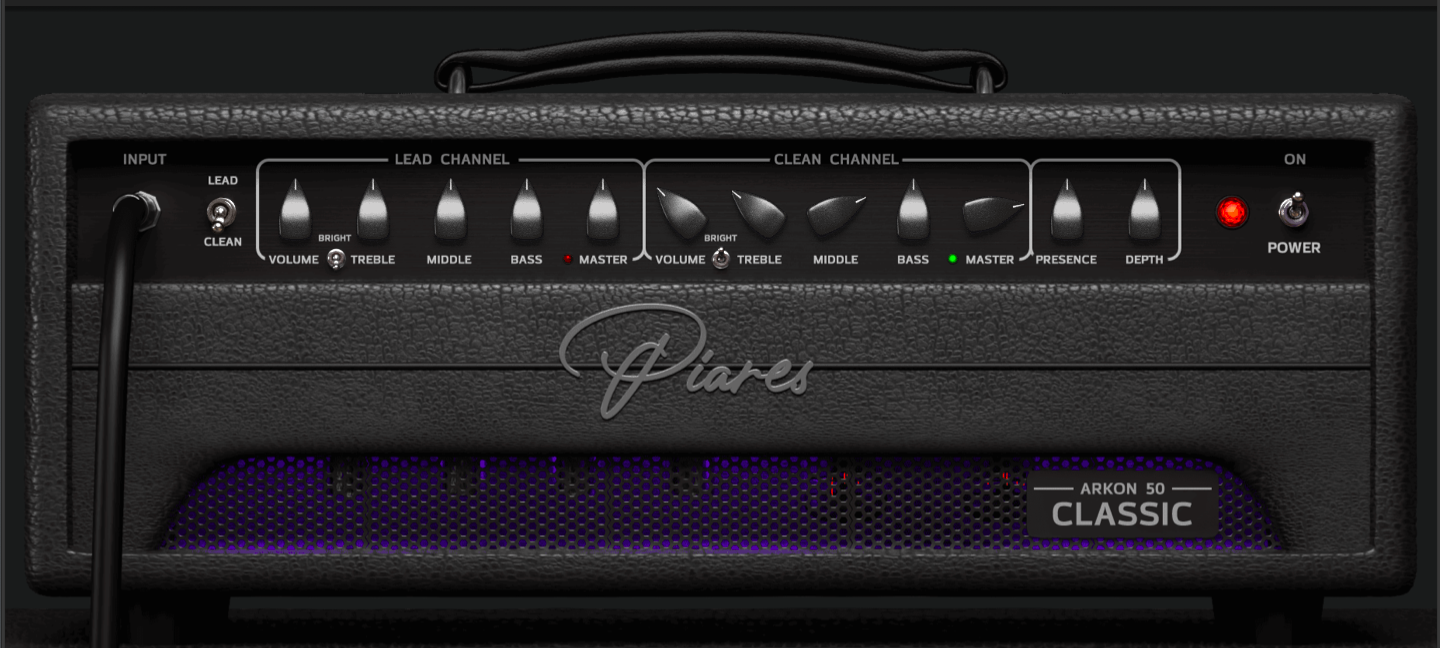
The “Liquid Fusion” EQ Settings:
| Control | Setting | Why? |
| Gain | 4.5 – 5.5 | You want “hair” on the notes, but no “crunch.” |
| Bass | 4.0 | Keep it tight so fast low-string lines stay clear. |
| Middle | 7.5 | The Secret. Fusion lives in the low-mids for that vocal quality. |
| Treble | 4.5 | Smooth it out. You want “warmth,” not “bite.” |
| Presence | 5.0 | Adds the “air” needed for complex jazz chords. |
| Master | 7.0 | Pushes the power-amp for natural compression. |
2. The Pedals: Texture & Sustain
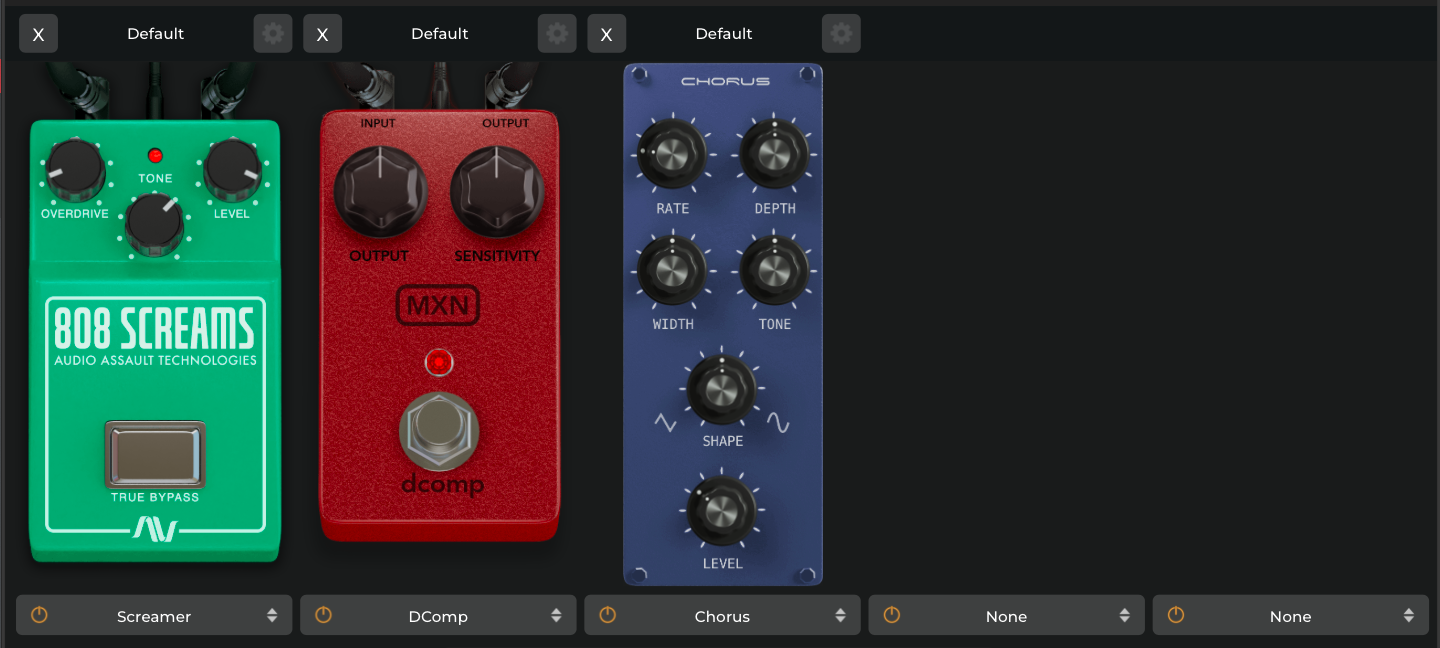
In Fusion, pedals are used to “color” the sound and add the sustain needed for saxophone-like phrasing.
- The Overdrive: The Klone (Modelled after the Klon Centaur) or alternatively the Screamer.
- Gain: 2.0.
- Level: 6.0.
- Treble: 4.0 (Roll it back to keep it “creamy”).
- Why: It adds a mid-hump that makes solo lines “pop” without adding harsh distortion.
- The Compressor: Mini Attack.
- Setting: Place this first.
- Why: Essential for that “squashed” clean tone used in funk-fusion rhythms and to help legato notes ring out evenly.
- The Modulation: Korus.
- Rate: 1.5.
- Depth: 3.0.
- Why: A staple of the 80s/90s fusion sound (Metheny/Stern). It adds a shimmering, “chorused” width to your chords.
3. The Cab: High-Fidelity 2×12
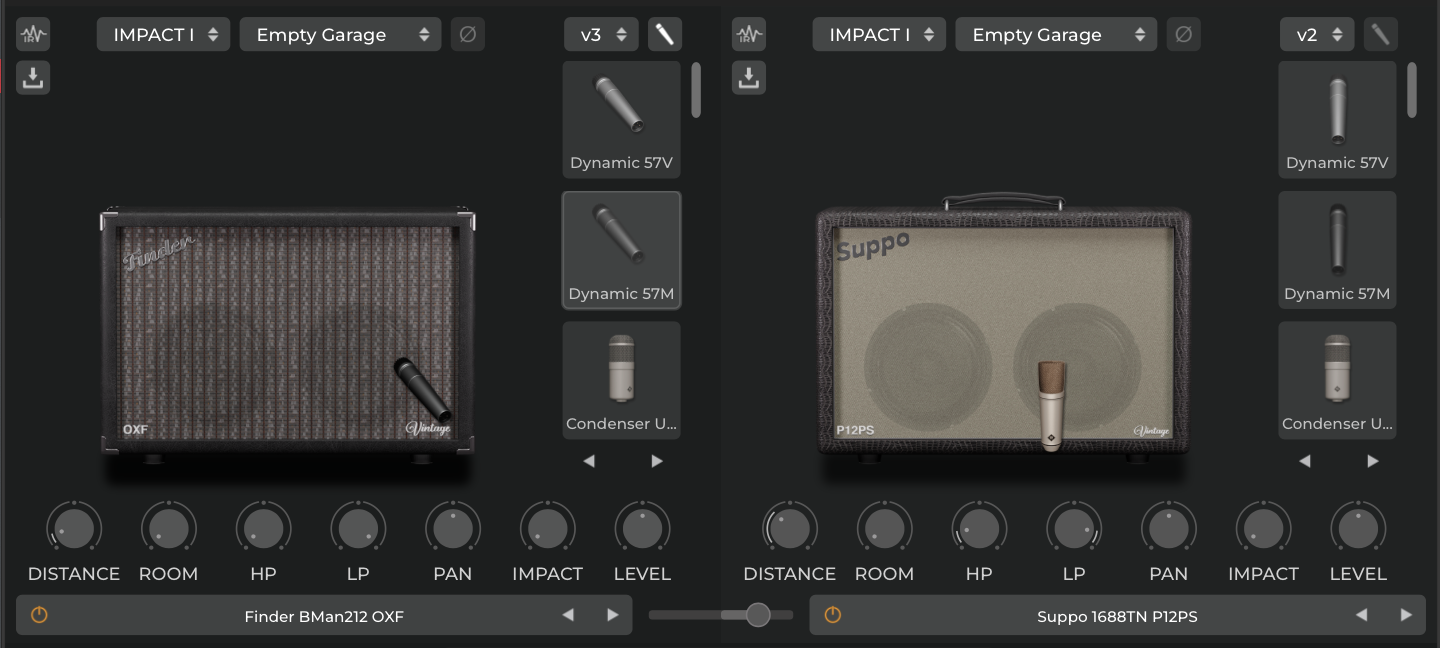
You want a cabinet that doesn’t color the sound too much. A 4×12 is often too “boomy,” while a 1×12 might lack the “girth” for big lead lines.
- Audio Assault Choice: ARCHON212 or the JP_JAZZCHOIR (Based on the Roland Jazz Chorus speakers).
- Mic Setup:
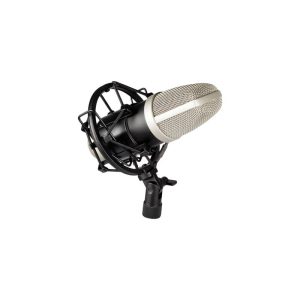
- Mic: Condenser 87.
- Position: 3 inches back, slightly off-center.
- Why: Condenser mics capture the full frequency range (20Hz–20kHz) more accurately than dynamic mics, giving you that “expensive” studio hi-fi sound.
4. The Finish: The “Deep Space” Delay
Fusion is often associated with “atmospheric” space. Your notes should feel like they are floating.
- Delay: Digital Delay.
- Time: 450ms.
- Feedback: 4 repeats.
- Mix: 20%.
- Reverb: Space Verb (Large Hall setting).
- Mix: 30%.
- Decay: 3.0 seconds.
- Why: This creates a massive soundstage, allowing your solo lines to trail off elegantly.
5. Pro Tips for Fusion Mastery
- The “Volume Pedal” Technique: Place the Volume Pedal module before your Delay/Reverb. Use it to “swell” into notes, hiding the pick attack to simulate a violin or synth.
- The Hybrid Pick: For funk-fusion sections, use a pick. For the “smooth” jazz sections, use the flesh of your thumb or fingers to warm up the attack.
- Complex Voicings: Because we’ve dialed back the Treble and Gain, you can play complex chords (like $13b9$ or $maj7#11$) without the notes blurring together into a dissonant mess.
The “Fusion Recipe” Summary:
- Amp: Special Drive — Focused Mids, Smooth Highs.
- Pedal: The Klone — For “Liquid” sustain.
- Modulation: Korus — For that wide, shimmering stereo image.
- Cab: 2×12 with a Condenser Mic for hi-fi clarity.
In Audio Assault Amp Locker, we achieve this by balancing high-headroom “Clean” power with sophisticated, boutique-style “Lead” saturation. Here is your recipe for the “Interstellar” Fusion tone.
The “Liquid Harmony” Recipe Table
| Parameter | Setting | The “Fusion” Logic |
| Amp Model | Boutique “D-Style” or Clean American | You need an amp that stays clear even when pushed to the limit. |
| Gain | 5.5 – 6.5 | Enough for sustain, but low enough that 7th and 13th chords don’t “clash.” |
| Bass | 4.5 | Controlled low end keeps fast chromatic runs from sounding muddy. |
| Mids | 8.0 | Essential. The “Vocal” quality of fusion lives in the upper-mids. |
| Treble | 5.5 | Rolled back slightly to achieve that “warm” yet “singing” top end. |
| Presence | 5.0 | Just enough to provide clarity for fingerstyle or hybrid picking. |
The “Legato” Secret: Compression & Clean Blend
Fusion players like Allan Holdsworth or Guthrie Govan rely on a “limitless” feel.
-
Studio Compressor: Place a compressor at the very start of your chain. Set a fast attack to catch the transients and a long release to help those legato lines bloom.
-
The “Clean” Mix: If your drive pedal or amp model allows, blend in a tiny amount of the Dry/Direct signal (around 10%). This keeps the “attack” of the pick crisp while the “gain” provides the sustain.
Spatial Ambience: The “Outer Space” Dimension
Fusion is rarely “dry.” It needs a sense of expensive, studio-quality space.
-
Shimmer Reverb: Use a Shimmer or high-quality Plate Reverb with a long tail for an ethereal, floating vibe.
-
Modulated Delay: Add a Delay with a subtle Chorus or Vibrato on the repeats. This creates the “swirling” texture heard in modern fusion records.
The Crystal Clear: Achieving the Iconic JC-120 Clean Tone 🧊✨
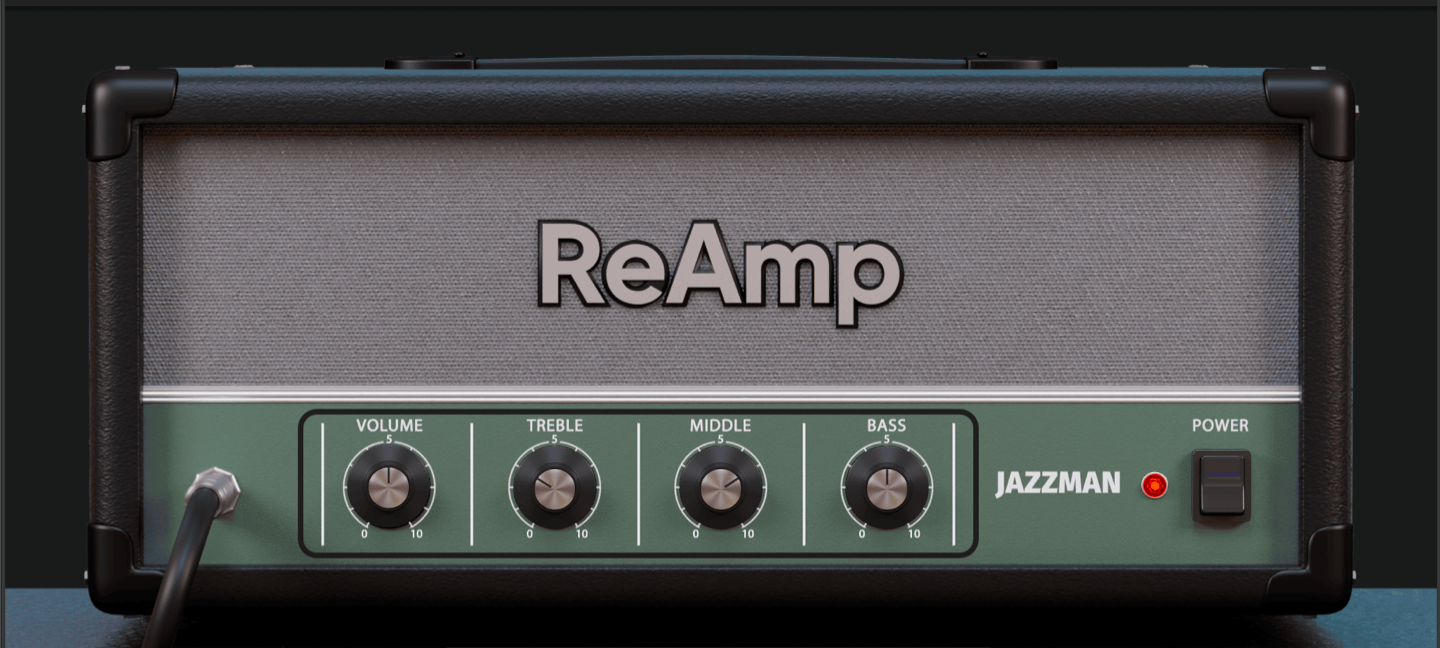
The Roland JC-120 “Jazz Chorus” is the undisputed king of clean. Known for its “hi-fi” response and that legendary built-in stereo chorus, it has been the backbone of everything from classic jazz to 80s New Wave and modern indie.
Here is how to dial in that ultra-transparent, lush “JC” sound in Audio Assault Amp Locker.
The “Solid State Perfection” Recipe
| Control | Setting | The “JC” Logic |
| Amp Model | Clean Solid State | Choose the flattest, highest-headroom clean model available. |
| Gain / Vol | 3.0 | Keep this low. You want zero clipping, even when you dig in. |
| Bass | 5.0 | Keep it neutral. The JC-120 is naturally quite full-bodied. |
| Mids | 4.0 | A slight scoop helps achieve that “glassy” 80s aesthetic. |
| Treble | 7.0 | Crank this for the “snap” and “sparkle” the amp is famous for. |
| Bright Sw. | ON | If available, engage the Bright switch to enhance the pick attack. |
The Secret Sauce: The Dimensional Chorus
You can’t have a JC-120 tone without the “Chorus” part.
-
Stereo Chorus: Place a Stereo Chorus pedal after the amp or in the FX loop.
-
Settings: Set the Speed (Rate) low (around 2.0) and the Depth high (around 7.0).
-
The Trick: The JC-120 uses “Dimensional Space Chorus,” meaning one speaker is dry and the other is wet.1 To mimic this, use a Stereo Spread tool to ensure the modulation feels like it’s wrapping around your head.
Finishing Touches
-
Compression: Use a Sustainer/Compressor pedal to get that “squashed” funky pop sound.
-
Reverb: Add a touch of Spring Reverb (around 2.5) to give the dry signal some air without washing it out.