



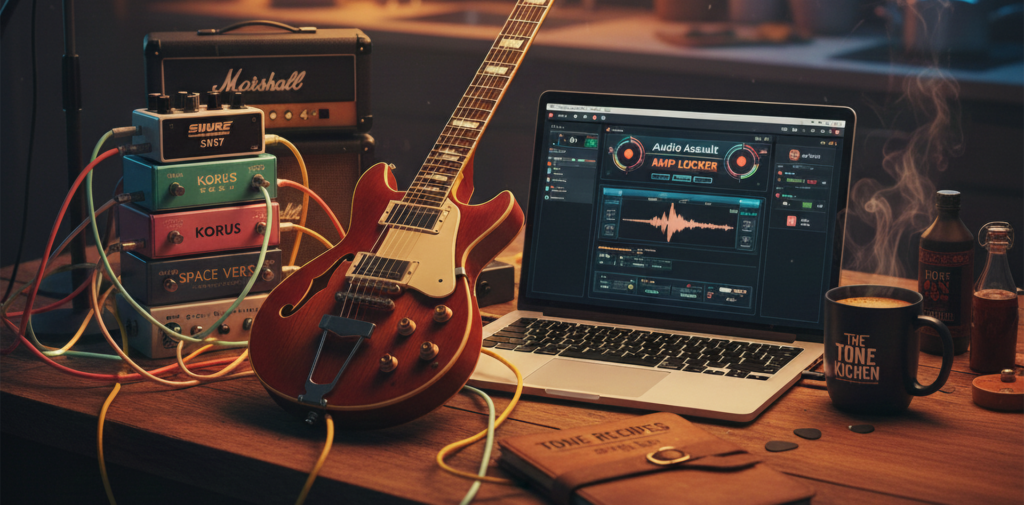

The Master Collection is currently in development. Sign up for the VIP Menu below to be the first to know when the pack drops.
 Acessórios
→
Acessórios
→
 Acessórios para dj
 Acessórios para microfone
 Acessórios de Bateria / Percussão
 Acessórios de estúdio
 Acessórios para Guitarra e Baixo
 Acessórios para Instrumentos de Cordas
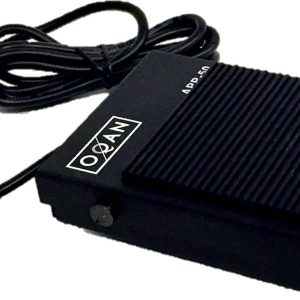 Acessórios para Piano e Teclados
 Case, Racks e Sacos
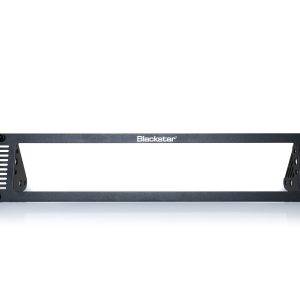 Estantes e Suportes
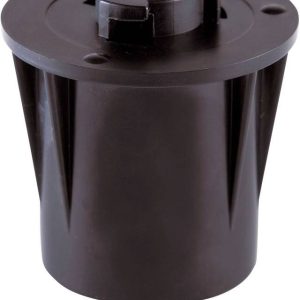 Outros Acessórios
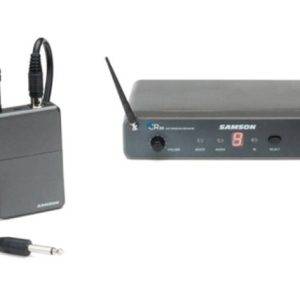 Sistemas Wireless
 Transformadores / Alimentadores
 B-STOCK
 Bateria e Percussão
→
Bateria e Percussão
→
 Cabos e Conectores
→
Cabos e Conectores
→
 Colunas e Audio
→
Colunas e Audio
→
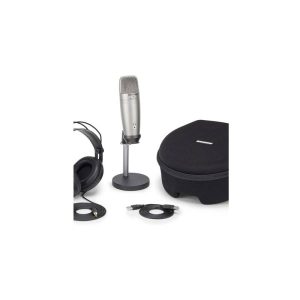 Estúdio e Gravação
→
Estúdio e Gravação
→
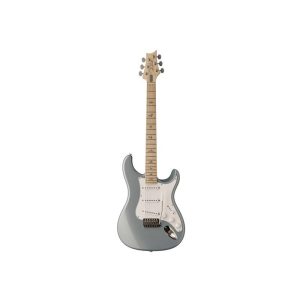 Guitarras e Baixos
→
Guitarras e Baixos
→
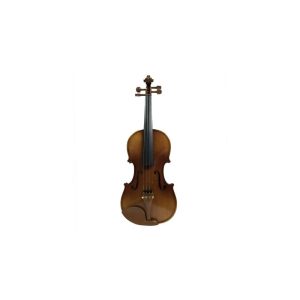 Instrumentos de Cordas
→
Instrumentos de Cordas
→
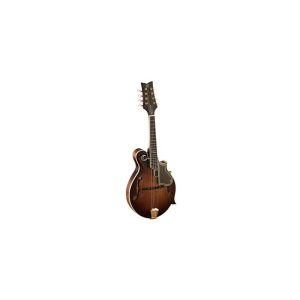 Instrumentos Tradicionais
→
Instrumentos Tradicionais
→
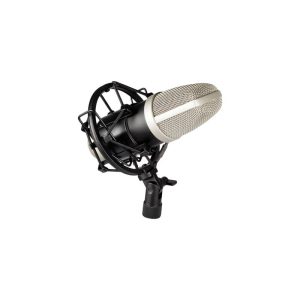 Microfones
→
Microfones
→
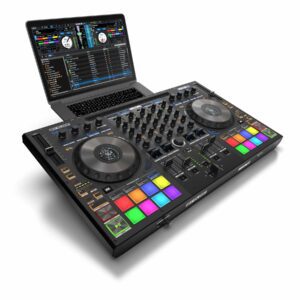 PRO DJ
→
PRO DJ
→
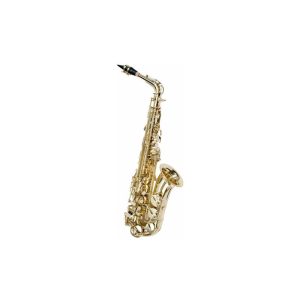 Sopros
 Store News
 Teclados
→
Teclados
→
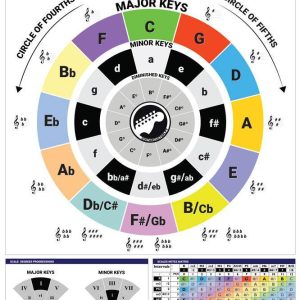 Teoria Musical



The Preset Pack “Tool Kit” for Professional Guitar Tones in Audio Assault AmpLocker