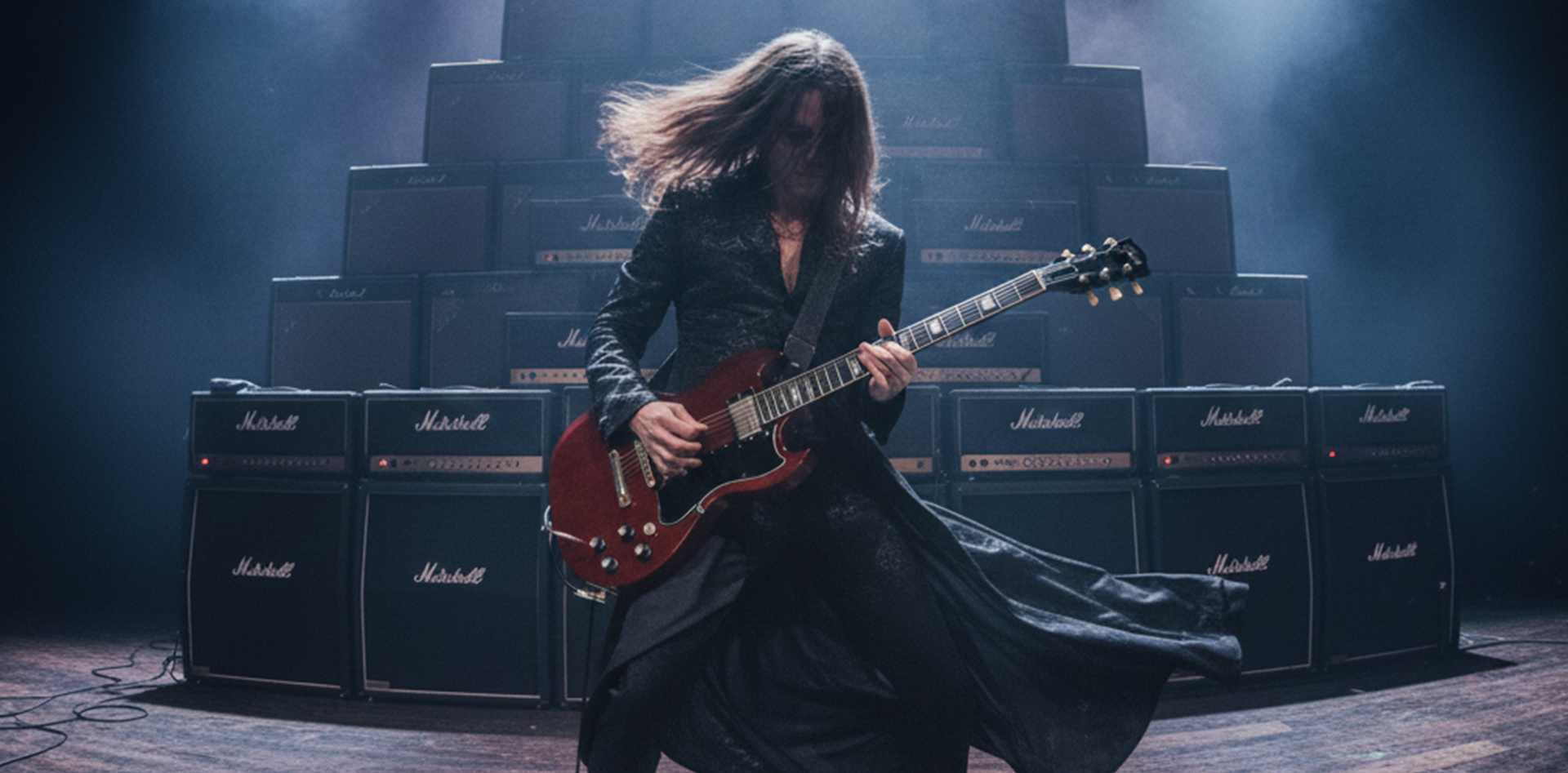
When you think of Jimmy Page, you think of “The Architect of Light and Shade.” His tone wasn’t just about heavy distortion; it was a masterful balance of bridge-pickup bite, mid-range “honk,” and a massive sense of room ambiance. From the small Supro combos used on Led Zeppelin I to the towering Marshall stacks of the 70s, Page’s sound is the blueprint for classic rock.
Using Audio Assault’s Amp Locker, we can recreate the “Led Zeppelin II & IV” era—the quintessential “Plexi” sound—using their precisely modelled British circuits and vintage cabinets.
Here is your recipe for the “Golden God” tone. 🔥🎸
1. The Core Amp: The British Legend
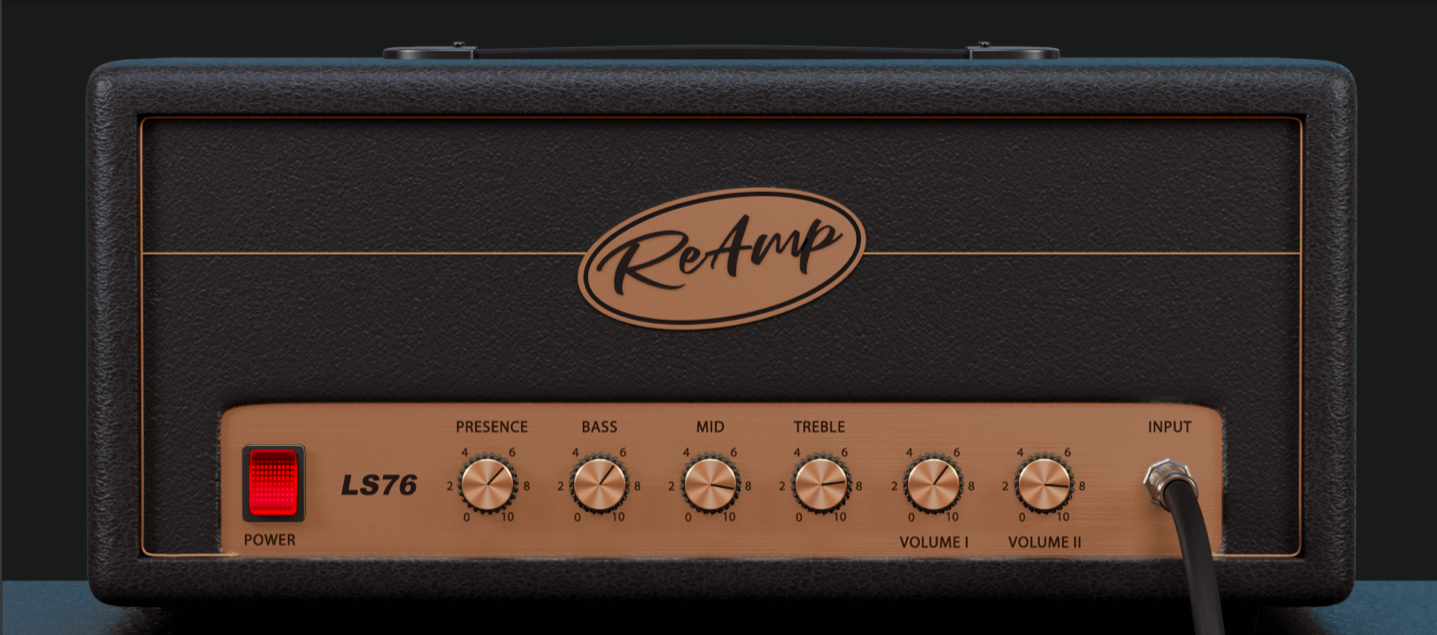
While Page used many amps, his live and late-studio sound is defined by the Marshall Super Lead. However, he famously had his amps modded with KT88 tubes for more headroom and a cleaner “clank.”
- The Audio Assault Choice: LS76 (Modelled after a boutique Suhr SL67 Plexi-style circuit).
- Why: The LS76 perfectly captures the touch-sensitivity of a vintage Marshall. When you pick light, it’s clean; when you dig in, it growls. It has the exact high-mid “snarl” required for the Black Dog riff.
The “Madison Square Garden” EQ Settings
| Control | Setting | The Logic |
| Gain/Volume | 6.5 | Page’s tone is cleaner than you think. This provides “crunch,” not “fizz.” |
| Bass | 5.0 | Balanced. You want the “thump” without losing definition. |
| Middle | 7.5 | Crucial. This gives you that “honky” Les Paul mid-range. |
| Treble | 7.0 | For that stinging bridge-pickup “tele-on-steroids” bite. |
| Presence | 6.0 | Adds the “sizzle” and harmonic detail. |
| Master | 8.0 | Pushes the virtual power section for that classic “sag.” |
2. The Pedals: Vintage Preamp & Boost
Page didn’t use many pedals, but he relied heavily on his Maestro Echoplex EP-3. He loved the way its internal preamp “sweetened” his signal even when the delay was off.
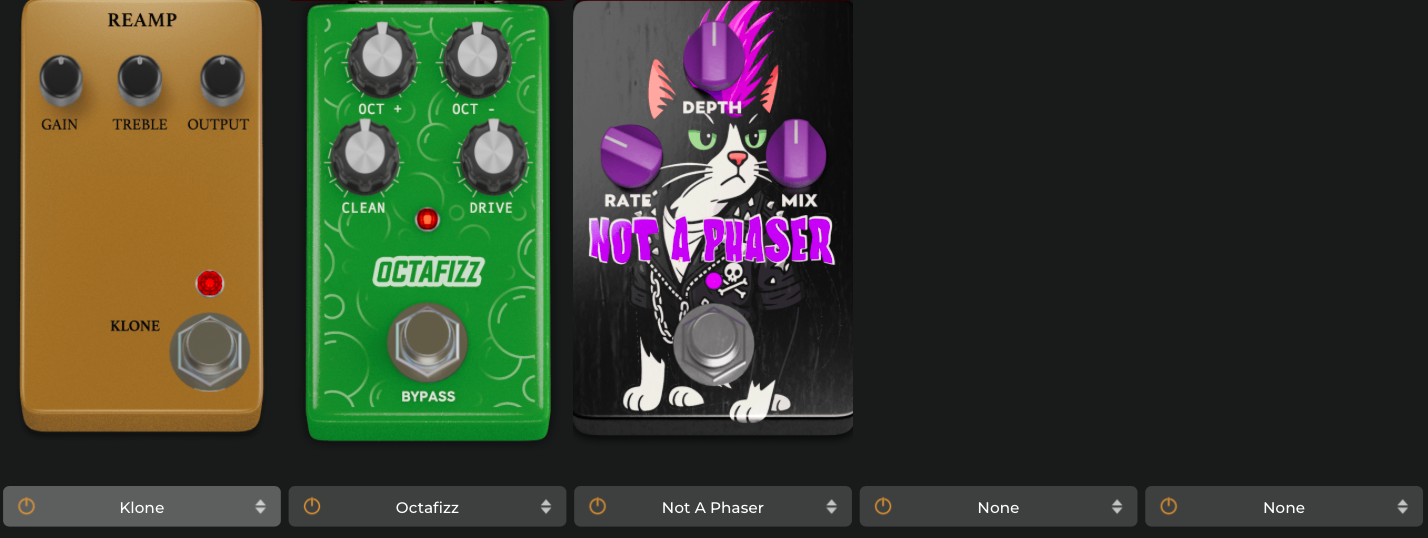
- The Preamp Boost: The Clone (Modelled after the Klon Centaur).
- Gain: 1.0 (Keep it low).
- Level: 6.5 (Use it to “push” the amp).
- Treble: 6.0.
- Why: Use this to simulate that “always-on” preamp warmth that thickens the guitar signal.
- The “Whole Lotta” Fuzz: Octafizz (from the Soda Pack).
- Settings: Use only for those specific “Zep I” style solos. Keep the fuzz at 4.0 and roll your guitar volume back.
- The Modulation: Not A Phaser.
- Rate: 1.0 (Very slow).
- Setting: Use sparingly for The Rover or The Song Remains the Same style textures.
3. The Speaker: The 25W Greenback “Bark”
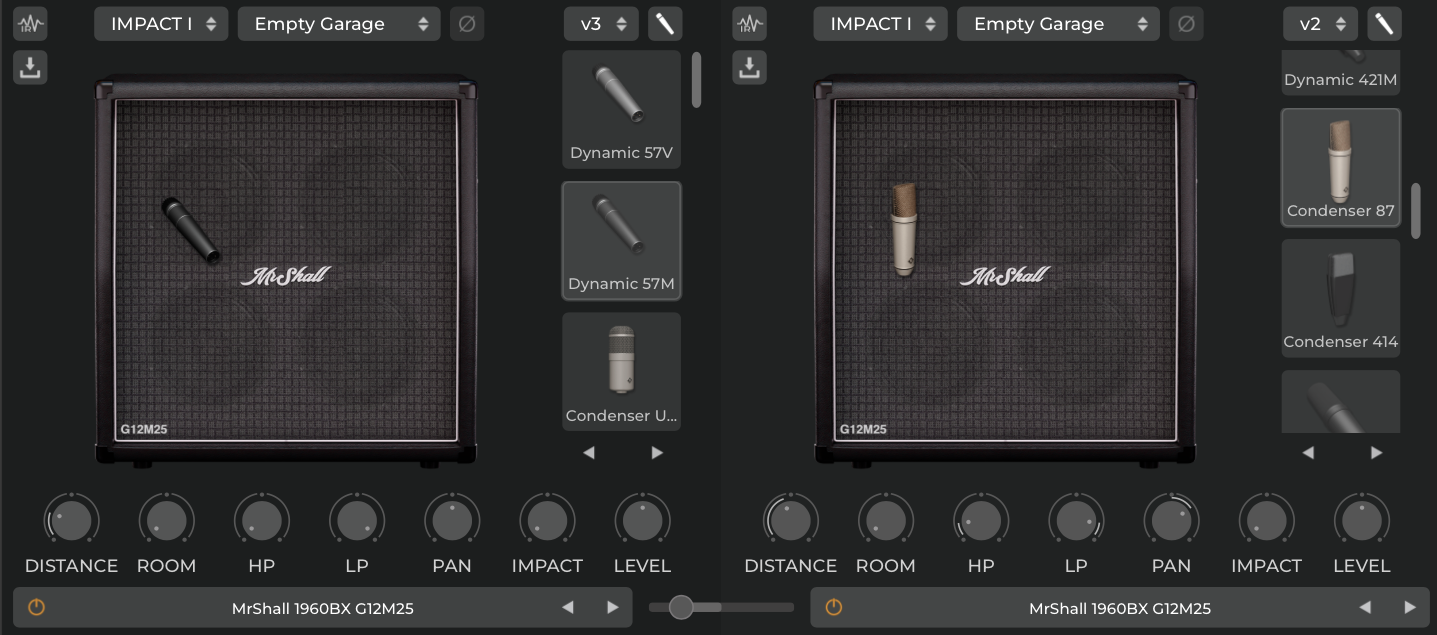
A huge part of Page’s sound is the cabinet. He used Marshall 4x12s, but the way they were recorded—often with a mix of close and distant mics—is key.
- Audio Assault Choice: BRIT_1960A_PRM25 (Based on a Marshall 1960A with 25w Greenbacks).
- Mic Setup (The “Light and Shade” Secret):
- Mic 1: Dynamic 57. Place it 2 inches back, pointed at the edge of the speaker cap for “bite.”
- Mic 2: Condenser 87. Place this one virtually “back” in the room (around 12–18 inches) and blend it in at 40%. This creates the “huge” sound heard on When the Levee Breaks.
4. The Finish: “Ocean” Reverb & Delay
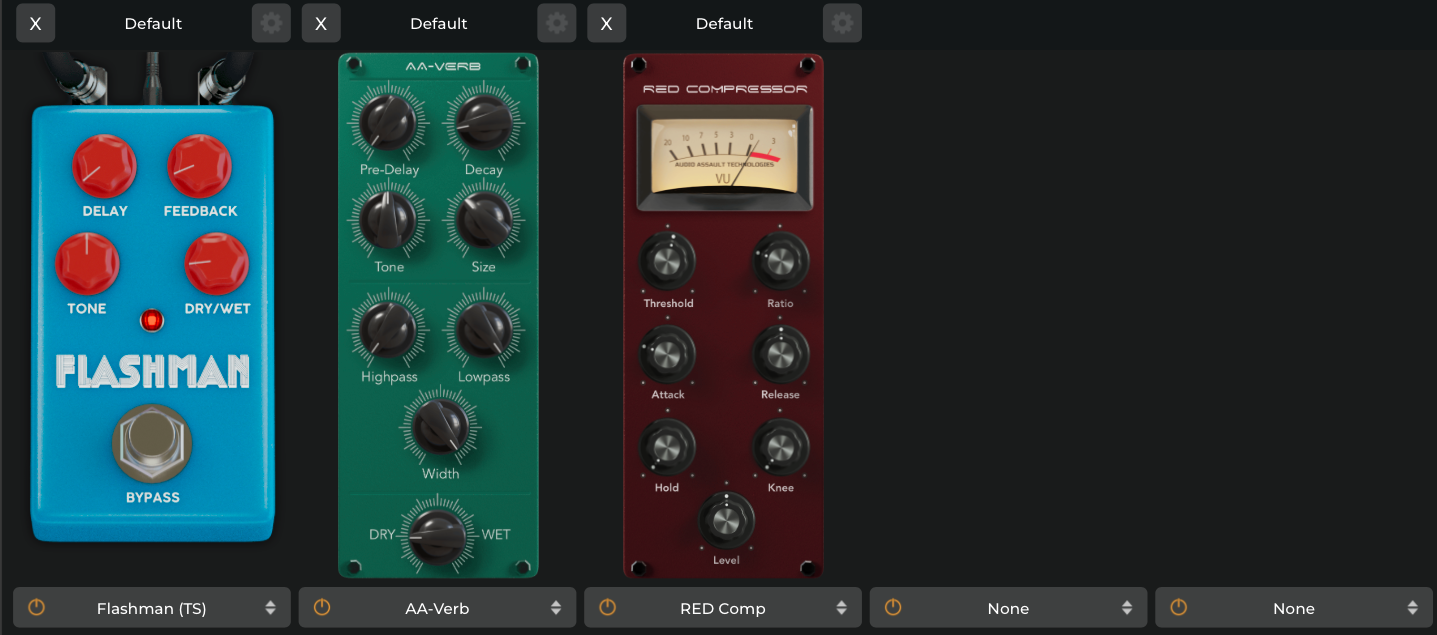
Page was a producer as much as a guitarist. He used “distance mics” to create natural reverb.
- The Delay: Digital Delay.
- Time: 300ms.
- Feedback: 2-3 repeats.
- Mix: 15%. This is the “slap” heard on many of his solos.
- The Reverb: Vintage Spring.
- Setting: 4.0. Page loved spring reverb for its “clangy” character on clean passages like Stairway to Heaven.
5. Pro Tips for the Page Soul
- The “Middle” Position: Switch your Les Paul (or HH guitar) to the middle position and roll the neck volume back to 7 and the bridge to 10. This creates that hollow, “quacky” tone Page used for rhythm.
- Pick Attack: Page played with a lot of “swagger.” Pick near the bridge for more “ice-pick” cut, and move toward the neck for those “creamy” blues licks.
- Volume Control: The LS76 plugin is highly responsive. Set the amp to crunch, then roll your guitar volume down to 3 for the beautiful “clean-ish” tones found in The Rain Song.
The “Jimmy Page Recipe” Summary:
- Amp: LS76 — Mids and Treble up, Master pushed.
- Pedal: The Clone — Used as a subtle harmonic enhancer.
- Cab: 1960A — Mixed with a distant condenser mic for “room” feel.
- Vibe: Heavy on the middle-position pickup and dynamic picking.