
Achieving the “David Gilmour” tone, The “Pulse” Recipe—that majestic, wide-as-the-ocean sound—requires a very specific philosophy: extreme clean headroom paired with surgical gain stacking.
While most rock gods rely on amp distortion, Gilmour uses his Hiwatt amps as a massive, blank canvas and paints his “colors” (Big Muffs and Tube Drivers) on top. Here is how to replicate the Pulse and The Wall era tones using the Audio Assault Amp Locker ecosystem. 🔥🎸
1. The Foundation: The “Hi-Clean” Amp
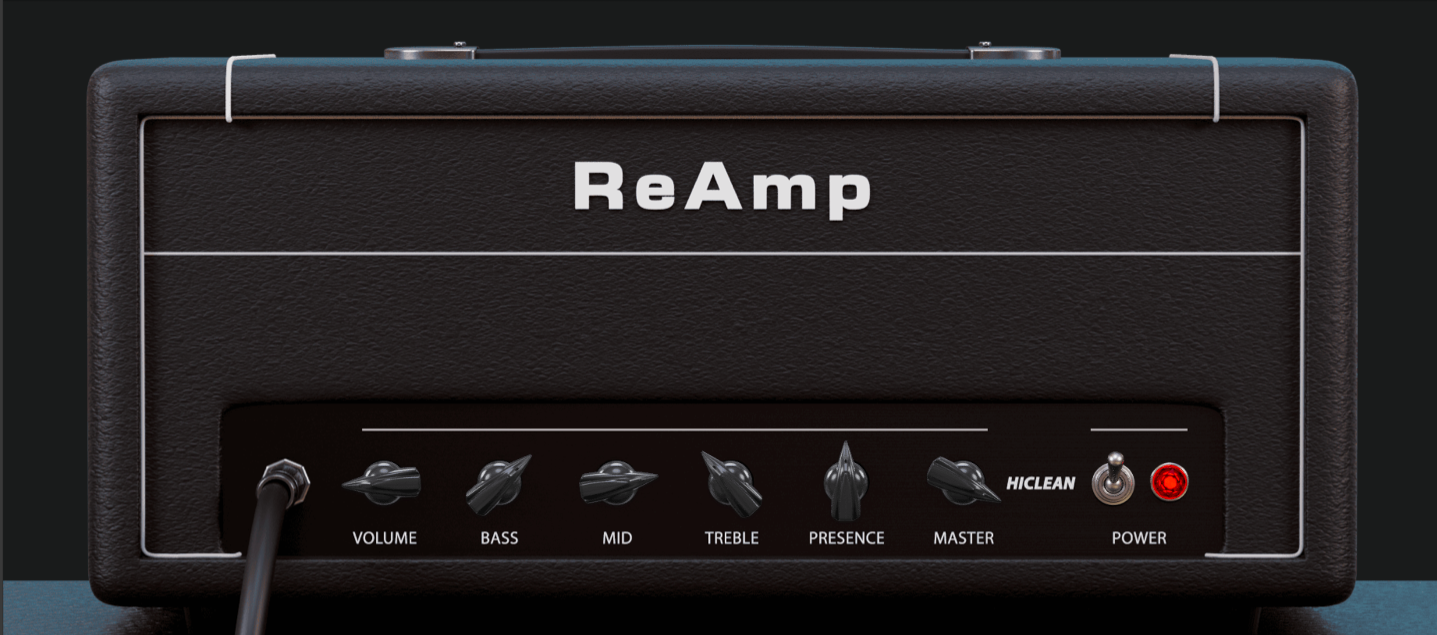
You cannot get this tone with a Marshall or a Fender. You need the “military-spec” clarity of a Hiwatt.
- Audio Assault Model: Hi-Clean (Modeled after the Hiwatt Custom 100 DR103).
- The Philosophy: We want the amp to stay crystal clear even when hit with a loud fuzz pedal.
The “Pulse” EQ Settings
| Control | Setting | Why? |
| Gain | 2.5 | Keep it clean. No “hair” on the notes yet. |
| Bass | 6.5 | Adds the “thump” and authority to the low end. |
| Middle | 7.0 | Crucial for the “vocal” quality of his solos. |
| Treble | 4.0 | Hiwatts are bright; keep this lower to avoid “ice-pick” highs. |
| Presence | 5.0 | Adjust for the “air” around the notes. |
| Master | 8.5 | Crank the Master to get that power-tube “bloom” without distortion. |
2. The Gain Stages: Fuzz & Overdrive
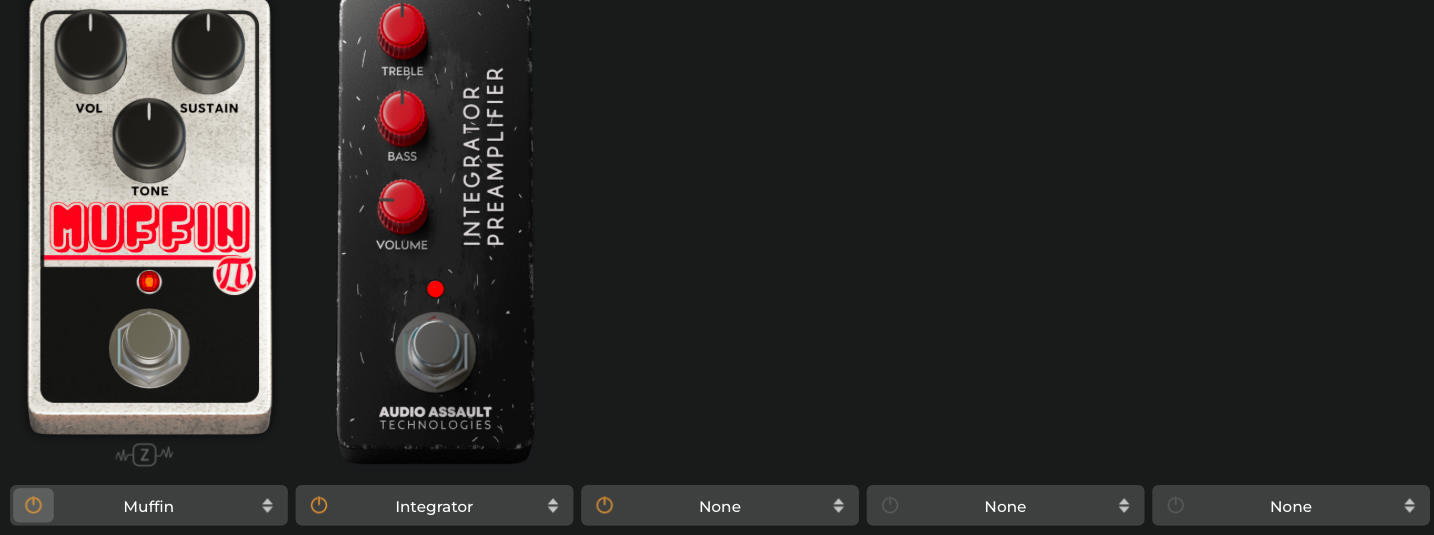
Gilmour’s lead tone is famous for its “endless sustain.” This isn’t just one pedal; it’s a stack.
Step A: The “Muffin” (Drive Pack A)
This is the heart of the Comfortably Numb solo. It is Audio Assault’s take on the EHX Big Muff Pi.
- Sustain (Gain): 7.5 (For that violin-like singing quality).
- Tone: 5.0 (Find the “sweet spot”—too high is buzzy, too low is muddy).
- Level: 6.0 (Match the volume of the bypassed signal).
Step B: The “Integrator” (Preamp/Booster)
Gilmour famously uses a Tube Driver after his Muff to smooth out the jagged edges of the fuzz and add midrange warmth.
- Gain: 2.0 (Just a hint of “tube” grit).
- Volume: 7.5 (Use this to “push” the signal and round off the Fuzz).
3. The Atmosphere: Delay & Modulation
If the amp is the canvas and the pedals are the paint, the effects are the lighting.
- The Modulation: Korus (Modeled after the Boss CE-2).
- Rate: 3.0 (Slow, lush movement).
- Depth: 4.5.
- Placement: Put this after the amp in the FX loop section for that clean, 80s shimmer.
- The Delay: Digital Delay.
- Time: 440ms to 540ms (Standard Gilmour “long” delay).
- Feedback: 4-5 repeats.
- Mix: 30%. It should sit behind the notes, not compete with them.
4. The Voice: The Hiwatt 4×12 Cab
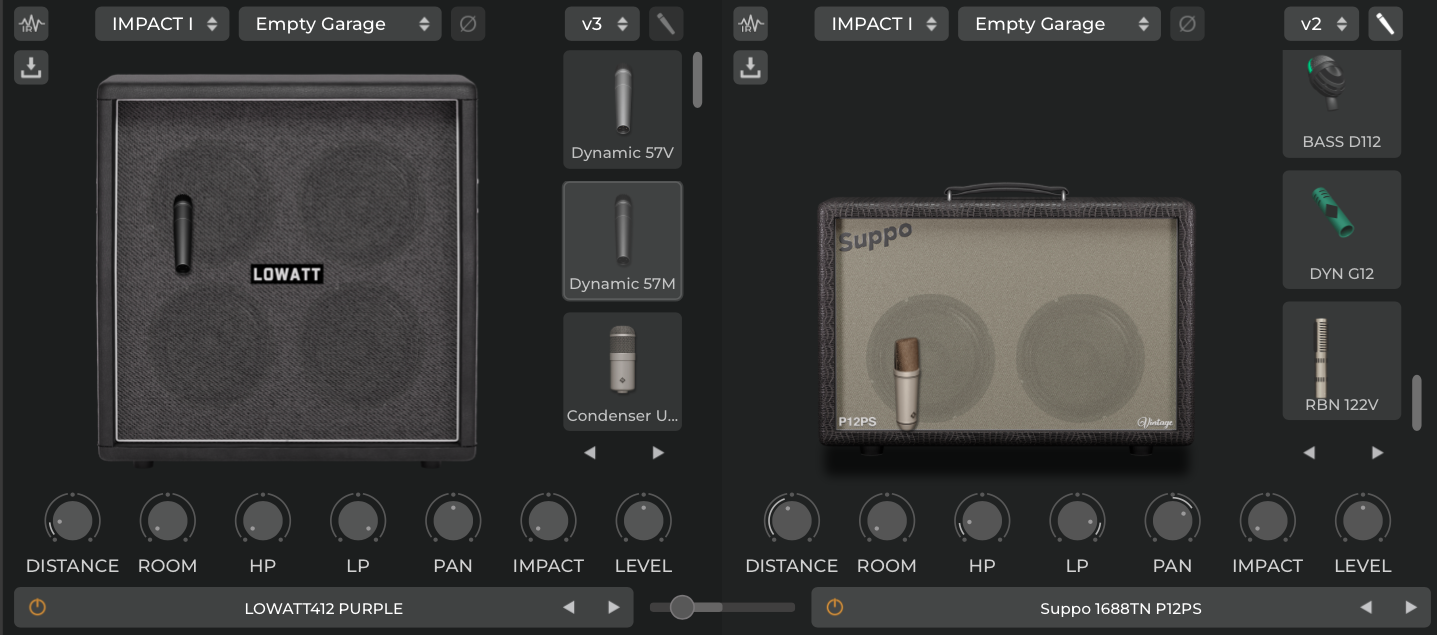
Gilmour used WEM or Hiwatt cabinets loaded with Fane speakers. They have a flatter frequency response and more “heft” than standard Celestion V30s.
- Selection: BRIT_HWATT_4121_PPB.
- 3D Mic Setup:
- Mic 1: Dynamic 57 – Place it 1 inch from the grill, halfway between the center and the edge of the cone.
- Mic 2: Condenser 87 – Move this back about 12 inches to capture the “room” and the scale of the sound.
5. Pro Tips for the Gilmour Soul
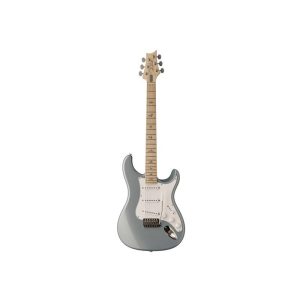
- Pickups: This recipe works best with a Stratocaster. Use the bridge pickup for the Comfortably Numb solo and the neck pickup for the “shine on” intro.
- The Volume Knob: If the fuzz is too aggressive, roll your guitar’s volume back to 9. It will smooth out the high-end fizz instantly.
- Vibrato: Gilmour’s tone is 50% his fingers. Use a slow, wide, and “intentional” vibrato to let the notes bloom within the delay.